
This would be your ordinary Sunday, church ticked, lunch ticked, a little nap there ticked. And like every other Sunday afternoon, dad has some village meeting to attend and mom has some gathering to go to, or as was often the case a birth celebration – born-house to be apt – with the women.
The uncomfortable celebration of men
Everything seemed normal in this routine, but what never seemed normal to me as a young girl was the choice of the song that always came steaming through the roofs in the ladies’ festivities, their loud celebration songs for a newborn baby, which celebrated their husbands more. The men’s meetings were different, usually heated and there were always arguments on financial lines. Most meetings seem to have one Okonkwo who wasn’t great with money. And you could sense from a distance that someone hadn’t paid their contribution, someone had ‘eaten the njangui’ yet has turned out to be a perpetual defaulter. Somehow these always got sorted at the end.
And so my anguish remained with the women. As a 13-year-old, no song came close to being more traumatic than the loud chants of happy women at the celebration of a newborn in my community. It was the women’s singing and celebrating that left me with lots of questions. “What are they really celebrating and why on earth should their moment of joy include celebrating these same men who put most of them through so much? I often wondered.
Violence in the community: an open secret
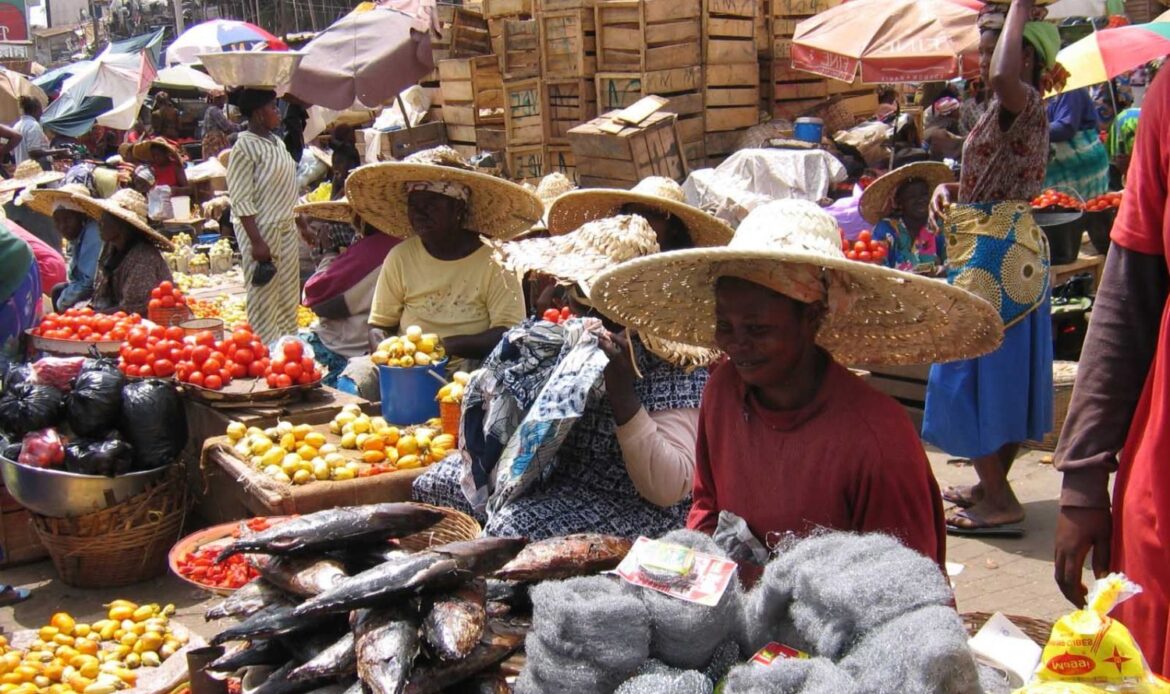
In the slums of Beseke where I grew up, most of the women were housewives. A few ventured into petit trade, selling corn, beans, koki corn, fruits, and whatever they could sell to make ends meet. Most had come to the painful realisation that the complete dependence on their men was a source of heartache and headache. Most of these women were regular victims of domestic violence and other forms of physical and emotional abuse.
Domestic violence was so common that it was never a topic of discussion among the children. Now and then, someone would comment, like “Bih e papa beat e mami yesterday” or “Bih e papa and mami be di fight yesterday”. I always preferred the latter, because you truly never know these things, the person screaming the loudest is not always the one feeling the most pain, I later came to be told. This comment was always made as an observation, with no judgement whatsoever. The reasons for keeping it as a mere observation weren’t purely out of good fate. It wasn’t a discussion for any child my age to indulge in, not because it wasn’t a juicy piece of the discussion, but because no one felt comfortable running their mouths because you were never too sure whose parents’ fight would be next.
Perhaps you now understand why I could not comprehend why these women made their joyful Sundays, their moments of great celebration, to centre on the men – their massa’ who inflicted lots on them. But a traditional ‘born house’ is all about singing, dancing, and eating. My question is, why did these women choose to sing about their husbands when they had a newborn baby to celebrate and help them forget some of their headaches and visible marital challenges? The vulgarity in their choice of words was another headache I had to bear with but a bigger headache was the unarguable joy and excitement with which they sang about their husband’s hard work. This song. ‘Na we Massa di work we di chop’ always came first. It was by far the most popular of all the born-house songs. Excuse my delay in signing the entire song. I am still mustering up the courage.
“What was there to celebrate about these men? In fact, what was there to celebrate about another baby, when their future would be so uncertain?”. “Will they go to school, will they have food, will they have good health, access to health care? My teenage mind would ponder on a whole lot of questions. Later, I would come to appreciate that every child is indeed a great gift worth the loudest celebration. But my big question as to the role of the men in this celebration song was still unanswered.
But, why did these women feel a need to recognize the hard work of their men in these celebrations? Why did they feel the need to recognize the role of their men as breadwinners and providers when clearly most of them were not providing as they should?
I didn’t feel the need to call mom to get her take on the issue. The lyrics of the song kind of held me back. Mom was more like a matriarch in our community, she would support these women, advise them to embark into small trade and not rely entirely on the men, she knew their sufferings first-hand and would be in a good position to give me a clue or two as to why despite it all, they sang in praise and recognition of their men. But alas, I chickened out from calling mom, so we will have to find answers to this question ourselves.
Status measured by how well a husband provides
While every possible answer to this question will be subjective, I believe there’s something I observed which could justify this song choice. For as long as I can remember, the women who were the envy of their peers in my community were those who were well taken care of by their husbands, who visibly looked well-kept, and who visibly looked happy in marriage. It did not matter if you had a school degree, if you were a successful businesswoman, if you had a good job as some of them later did – as teachers, nurses, or local council employees – it just did not matter which career they had pursued and how well they had invested and developed themselves, it seemed not much counted. Given the painful reality of their times, a few of these women had started pursuing careers as teachers and nurses, and just as many others were beginning to do really well in their petite trade.
But despite their little successes and financial independence. The ultimate measure of success seemed to be the care, love and attention they got in the hands of those they called husbands. Maybe, this was a celebration of a deep aspirational goal. Maybe it went beyond the newborn baby, maybe and just maybe it was an expression of a deep common longing they shared, regardless of who and what they had become.
So much has changed for my generation, many women my age and generation had a great education. Many are so successful in their careers that they might actually be the breadwinners and main providers for their families. And I wondered if that is an aspirational goal that my generation shares.
How my generation seeks success and recognition
While much has changed for us, society still expects that the man provides. It appears too that many women still take pride despite their personal successes in being able to say, the man in my life is taking care of me. There’s nothing wrong with a man taking good care of his wife, but there’s something wrong with society putting women in a position that pushes them to tone down on their own accomplishments to look like the men are doing more for them than they actually are doing or able to.
Have you ever met a woman who makes up stories about the new car her husband just got her, or the 5-star holiday he recently took her to? I sadly know a few very successful women who make up such stories and it breaks my heart. If we make up such stories in 2021, then maybe, our mother’s aspirations goal was justified. Could it be that my observation, though very subjective, is telling that many women my age, of my generation, still share the same aspirational goal our moms captured in this song?
I personally find nothing wrong with the song, or the deeply hidden desires behind it, but there’s something wrong with lying to ourselves, to put up an attitude that is false and misleading. There’s something fundamentally wrong in doing so in 2021 when we are free to make any choice that is true to us.
Making empowered choices for fulfilment
So girl, if that’s a song you wish to sing, if that line captures any of your hidden aspirational desires, then sing it loud and as long as you can because nothing beats being true to yourself. Feminism allows you to make informed choices for your happiness and if a man who takes care of you constitutes one of the elements for your happiness, then you should be free to embrace that. This is especially so, because unlike our moms whose deep aspirational goal, whose desire for their men to take care of them, was borne from a position of weakness, we are making our own choices from a position of strength, from a position of power.
We are making informed choices for our happiness, so if your happiness is in singing ‘na we massa di work we di chop’ then do so. And if it is not in that, celebrate what it is in. Feminism frees us to be whatever we want to be, to embrace whatever makes us happy, to put up with what gives us fulfilment, and to drop what doesn’t. Feminism gives us choices and allows us to make the most informed ones for our happiness and for harmony. And actually, that’s all that matters.
Embrace what is true to you and celebrate it. It shouldn’t matter if your celebration song is, ‘na we massa di work we di chop’ or if it is captured in the opposite line ‘na we di work and we massa di chop’. It only matters that it is truly what your heart desires. If you’ve read this far and you are not a pidgin speaker, I hope you have figured out the meaning of that line by now, if you haven’t, the title of this blogpost,’ Na we massa di work we di chop’ is a line in a song women in my community sang when they were celebrating at the birth of a newborn. It says ‘our husbands work and we eat’.
You must have wondered why it has taken so long to give you the full lyrics of the song, I honestly have a hard time singing it, talk less of typing it out, but here it goes. It is rated 21, so do kindly refrain from singing it to young children…. Laughs
“Na we massa did work we di chop,
We di chop we did fat we di f’ck
We di f’uck, we di fat, we di born’
Eish !!! Let’s wrap this up…I think I might have mixed up some of the lines, but I am out.
9 replies on ““Na we massa di work, we di chop””
Just my kind of song. Indeed whether you sing it as is or yours is sang in reverse, as long as you sing from a position of power, own it. I love the write. Infact every time I read one write up I think this one is the best then You come up with another brilliant piece. This blog is not just about feminism my dear is about self belief, confidence, living on your own terms and so much more. Too liberated by your well articulated assertions to stop typing. Keep it up.
This story is quite intriguing, I actually found myself laughing at the end, the way you made us non pigeon readers to wait for the explanation of the song. Na we massa did work we did chop could have been inspired by the verse in the bible that says “because you have decided to listen to your wife and ate from the tree which I commanded you not to eat. The ground is cursed because of you, you shall eat from it by means of painful labour all the days of your life.” So while the women suffer during childbirth, the man still works hard to provide for his wife and family. So maybe that’s why they celebrate the man and not the child during childbirth.
What a beautiful write up. I really love this and this takes me back to my youthful age. I think the song depends on the context in which it is sang. A single woman will interpret it differently . I have this other very thrilling song as well” woman na weti eeeh? Woman na machine cheri wonder…..I think all these is to portray the place of a woman and the men as well.
Am a father of 4 ,two boys two girls l am doing my best for my daughters to be successful.l hope it will help them to chose what ever line of the song to sing or to reverse the lines. Good Inspirational write up my sister God bless you,let me forward to other groups.
Personally love the women song. That’s most women dream. For their husband’s to work and they spend. Even those hardworking independent women will still agree with the song. So though most didn’t have the luxury of getting the fullness of the song, nothing wrong in empowering your mind. Strong women of Beseke I must say. Powerful write-up again. Love it❤❤❤
Hahahahaah Scols! I love that song to bits! Its not that deep na….”na we massa di work we di chop..we di chop , we di fat, we di born ….ere hot ere hot ere shweeeeet!” Brings me to beautiful memories of a group my mom belonged to when I was very young. It was called “Neighbors’ meeting” and they had so much fun celebrating the birth of babies. That was the era when women were not empowered plus the song celebrates women too..acknowledging that “born di hot”
Na we massa di work could just mean head of household as is customary to our African tradition. I wouldn’t be offended. I’d sing it even today and have fun.
Good reflection Scols! Always different angles of looking at the same thing.
Hahaha that was then, women are now empowered and active participants in decision making . Good scripts
I have always cringed, when I heard that song. But you made it heart-warming….well somehow.
I think it’s time to embrace changes from all directions without being judgemental. I would like to see men and women chant this song with equal exuberance, lauding each other for their contributions to the family…both of them paying hommage to each other’s contributions. Abuse in botne out of the reflection that one party is doing the other “a favour”. Sadly, wo(+men) back then and even now seem to make it sound like staying at home and bearing children is not “work”. Unsalaried though it may be, that work will do your head in. I laud everyone, who is true to his or herself and proudly chooses a path that suits them. No be one size fit all for dis matter oh.
Great write up!
???????? this is so beautiful, sounds like a folktale but very true. Even in Nija we also have similar songs like this where men are accorded all the efforts in the family. It was also a way of making the men to do more then and they were really happy.
Narratives are changing but most women are still in that era of our grannies trying to put up a false appearance to make their men great . Anyway whatever that makes us happy is cool???? But that song is ????????????
Thank you my Creative writer, you’re really endowed with powerful ideas and creative ways of transmitting it????????????????